Many people looking to improve their health wonder about chickpeas, their nutrition, and what makes them a healthy food.
Many of the clients who see me for nutrition counseling and gut health issues have asked me about chickpeas. Here are answers to nine of the most frequent questions I get about chickpeas:
1) Are chickpeas and garbanzo beans the same thing?
Chickpeas and garbanzo beans, or garbanzos, are different names for the same bean. Another common name for them, especially in Italian cooking, is ceci or ceci beans. In Indian cooking, chickpeas are called gram or Bengal gram. A less common name, but one you may see sometimes, is Egyptian peas.
2) The most common chickpea nutrition question I get: Are chickpeas a carb or a protein?
Chickpeas count as both a carbohydrate and a protein.
One half-cup of cooked chickpeas provides approximately 22 grams of carbohydrates and 7 grams of protein. That’s the same about of protein as about one ounce of lean meat, lean poultry, or seafood, making chickpeas a great source of plant-based protein.
Including more plant-based proteins in your meals and even slightly reducing your consumption of meat can benefit your wallet, help improve your cholesterol and lower your carbon footprint. That’s one of the reasons why chickpeas are often included in the DASH diet and the Mediterranean diet.
3) Are chickpeas okay to eat if you have diabetes?
Yes! If you have diabetes, whole chickpeas are a good food to eat. Why?
It’s because your body digests them slowly, and your blood glucose won’t rise and fall quickly. Another key fact about chickpea nutrition is that along with 7 grams of protein, half a cup of cooked chickpeas has 6 grams of fiber. This results in chickpeas having both a low glycemic index and a low glycemic load.
But the reason why chickpeas are healthy goes beyond helping to manage your blood sugar. Keep reading!
4) Are chickpeas a good source of fiber? Are they good for gut health?
Chickpeas are an excellent source of fiber. Best of all, they contain both soluble and insoluble fiber. Both of these types of fiber are important for your gut health and can help you “stay regular”, “have a poop,” or whatever term you use for having a bowel movement.
Insoluble fiber is what I call “broom fiber.” It helps move the remains of your food through your intestines. This helps you to poop.
Soluble fiber is what I call the “sponge fiber.” Soluble fiber does several things in your intestines besides helping to prevent blood sugar spikes. It absorbs water. This can make it easier for some people to have a bowel movement.
Soluble fiber also helps reduce the amount of fat and cholesterol absorbed from the foods you eat and allows your body to flush it away when you poop. This is one of the reasons chickpeas are a “heart healthy” food and can lower your risk of heart disease.
Many types of soluble fibers, including the types found in chickpeas, are transformed by the beneficial bacteria in your gut into substances that can help to reduce inflammation in your body. This is why chickpeas can be part of an anti-inflammatory diet.
5) Are chickpeas a probiotic?
No. Sometimes it’s easy to get confused by nutrition terms. Chickpeas are considered a prebiotic, not a probiotic. What’s the difference? Probiotics are living microorganisms that can play an important role in your gastrointestinal tract and affect your gut health as well as your overall health and immune system.
Prebiotics are, using a highly unscientific definition, what probiotics eat. The easy way to remember the difference between the two is this: Prebiotics has an ‘e’ in the word, and so does the word “eat.”
6) Is eating chickpea pasta as good for you as eating chickpeas?
This is a question about chickpea nutrition that I’m hearing more often. Let me start with this: Don’t assume that your chickpea pasta is made only with chickpeas! Some are 100% chickpeas, but some brands have added starches and other ingredients.
If you absolutely can’t stand regular chickpeas but are willing to eat the pasta, eat the chickpea pasta! At least you are getting some of the benefits, but be sure to read the ingredient listing and nutrition fact label.
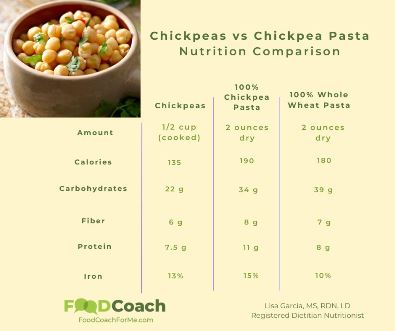
If you are trying to lose weight or manage blood glucose levels, I’d recommend chickpeas instead of chickpea pasta for dinner. Why? As you can see in the chart, pasta has more carbohydrates. Depending on what else you are eating and your body’s needs, it might result in a higher carbohydrate meal than you would want in the evening.
Having the chickpea pasta at lunch, however, would probably be okay, depending on how much you had and what else you were eating.
7) Are chickpeas and hummus the same in terms of nutrition?
Although hummus is made with chickpeas, they are not the same. Hummus is a combination of tahini (ground sesame seeds), oil, chickpeas, and spices. Depending on the brand or recipe, there can be other ingredients as well.
While hummus is delicious and healthy, to get the same amount of protein from hummus that you get from a half cup of chickpeas, you would need to eat 3 servings (6 tablespoons) of hummus. By doing this, you would also be eating more calories and getting slightly less fiber.
8) Are canned chickpeas as healthy as dry chickpeas?
Usually, the only nutrition difference between canned chickpeas and dry chickpeas you’ve cooked at home is the sodium levels. Canned chickpeas, unless you selected a low sodium can, will have more sodium. Both versions will have essentially the same protein, fiber, calories, and carbohydrates.
9) Since chickpeas have carbs, should I avoid them if I want to lose weight?
No! Including chickpeas in meals can help you lose weight as long as you watch your calorie intake and portions.
Research has shown that consuming chickpeas at a meal can reduce how much you eat a future meal. The fiber in chickpeas, along with their protein, helps slow digestion and keeps you fuller longer. It also helps keep your blood sugars from falling quickly, which can trigger hunger.
Chickpeas can be beneficial for your gut health, weight, and blood sugar levels
So the next time you’re shopping, pick up some chickpeas and try adding them to a meal at least once a week. It’s easy and can save you money on groceries as well.
Looking for other simple changes that can help you eat healthier, lose weight or have a healthier gut?
Then get more personalized help related to your eating habits or health by booking your free discovery call. We can talk about what you want to accomplish and see if working with me would be helpful to you.
Having personally struggled with weight and gut health issues, I understand how easy it is to think that food is the enemy especially with the changes our bodies undergo as we age. It doesn’t have to be that way!
I love using my extensive education and coach approach to help people realize it is possible to feel better and be healthier while still enjoying their life and food.